
Stress Fractures
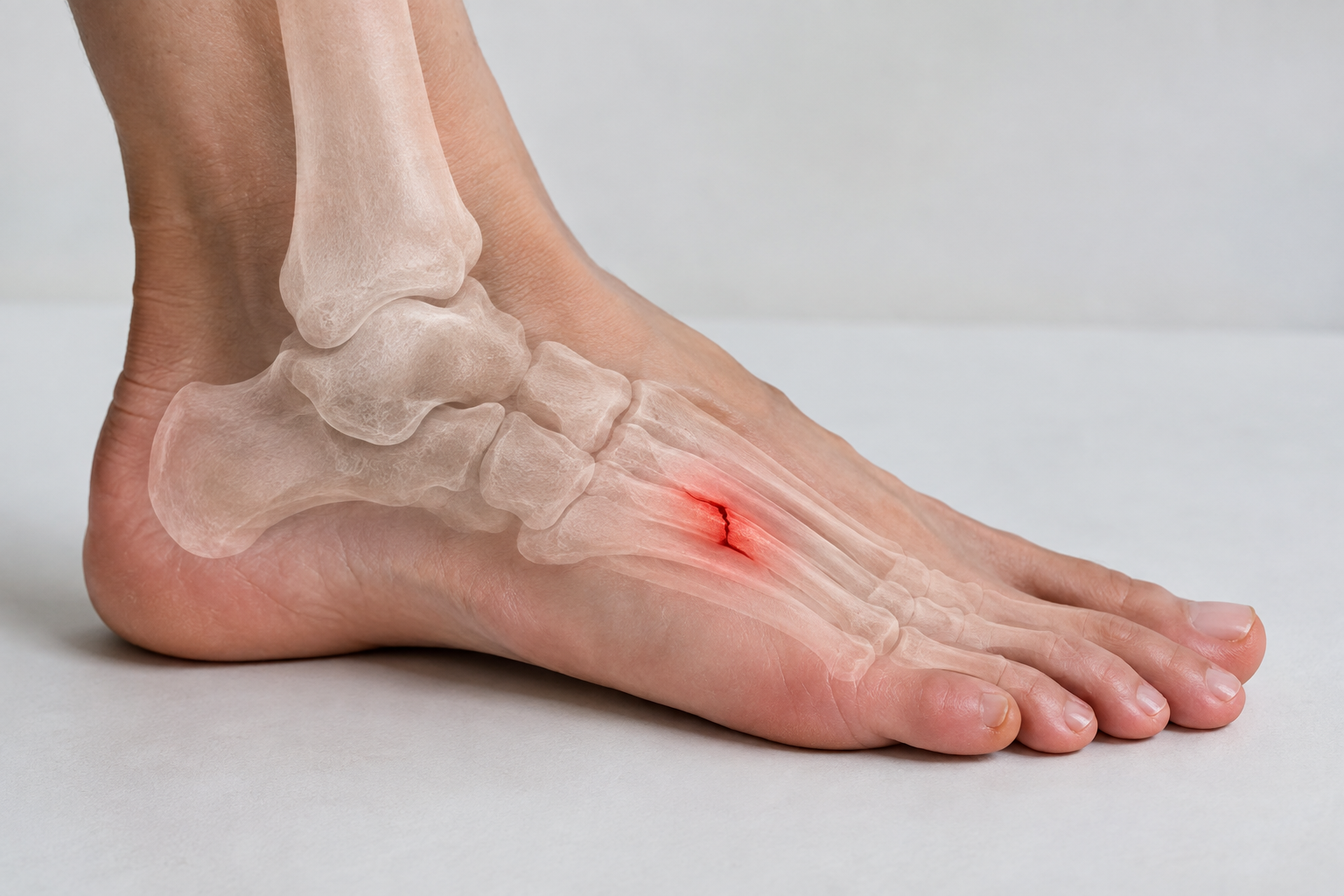
Stress fractures are small cracks in a bone that build up gradually from repeated impact, rather than a single traumatic injury. They’re especially common in the feet, where the metatarsals and heel bear the brunt of running, jumping, and standing.
At Emerald Hill Podiatry, we catch stress fractures early, before “just some soreness” becomes a bone that’s genuinely cracked, and guide patients through a recovery that protects the weak spot without unnecessary time off their feet.
What Is a Stress Fracture
A stress fracture is a small, hairline crack in a bone caused by repeated stress rather than a single impact or fall. It typically starts as a stress reaction, a kind of deep bone bruise, which develops when a bone is loaded repeatedly without enough time to recover between sessions. If that stress continues, the bruised area weakens further until an actual crack forms in the bone’s surface. Because stress fractures develop gradually, many people continue their usual activity for weeks before realising the pain isn’t going away on its own.
Where Does It Usually Occur

Stress fractures affect weight-bearing bones, and the foot and lower leg are among the most common sites, particularly:
- The metatarsals, the long bones connecting the ankle to the toes, which absorb much of the force during push-off
- The heel bone (calcaneus)
- The lower leg bones (tibia and fibula), particularly in runners
Certain factors raise the risk of developing a stress fracture in these areas, including a sudden increase in training intensity or distance, switching to a harder running surface, worn-out or unsupportive footwear, and structural foot issues such as flat feet, high arches, or bunions that change how load is distributed across the bones.
The Symptoms
- Pain that develops gradually and worsens with activity
- Pain that doesn't fully settle with rest, and may be more noticeable afterward
- Tenderness localised to one specific spot on the bone, rather than spread across the whole foot
- Swelling over the affected area
- Discomfort that progresses from "only during activity" to present even during normal walking, if left unaddressed

Why Rest Alone Is Not Always Enough
Rest is a necessary part of healing a stress fracture, but on its own it doesn’t address why the bone was overloaded in the first place. Without correcting the underlying mechanics, whether that’s training load, footwear, gait, or a structural foot issue, the same spot is likely to be re-injured once activity resumes.
Rest also doesn’t offload the bone during the healing period itself; continuing to walk normally on an unprotected stress fracture can slow healing or allow it to progress into a more serious, complete fracture.
This is why stress fractures are best managed with both protection during the healing phase and a plan to correct what caused it.
Get Your Stress Fractures Properly Assessed
Keep Your Foot Healthy
Treatment focuses on taking pressure off the healing bone while addressing the mechanical factors that caused the injury.
Options include:
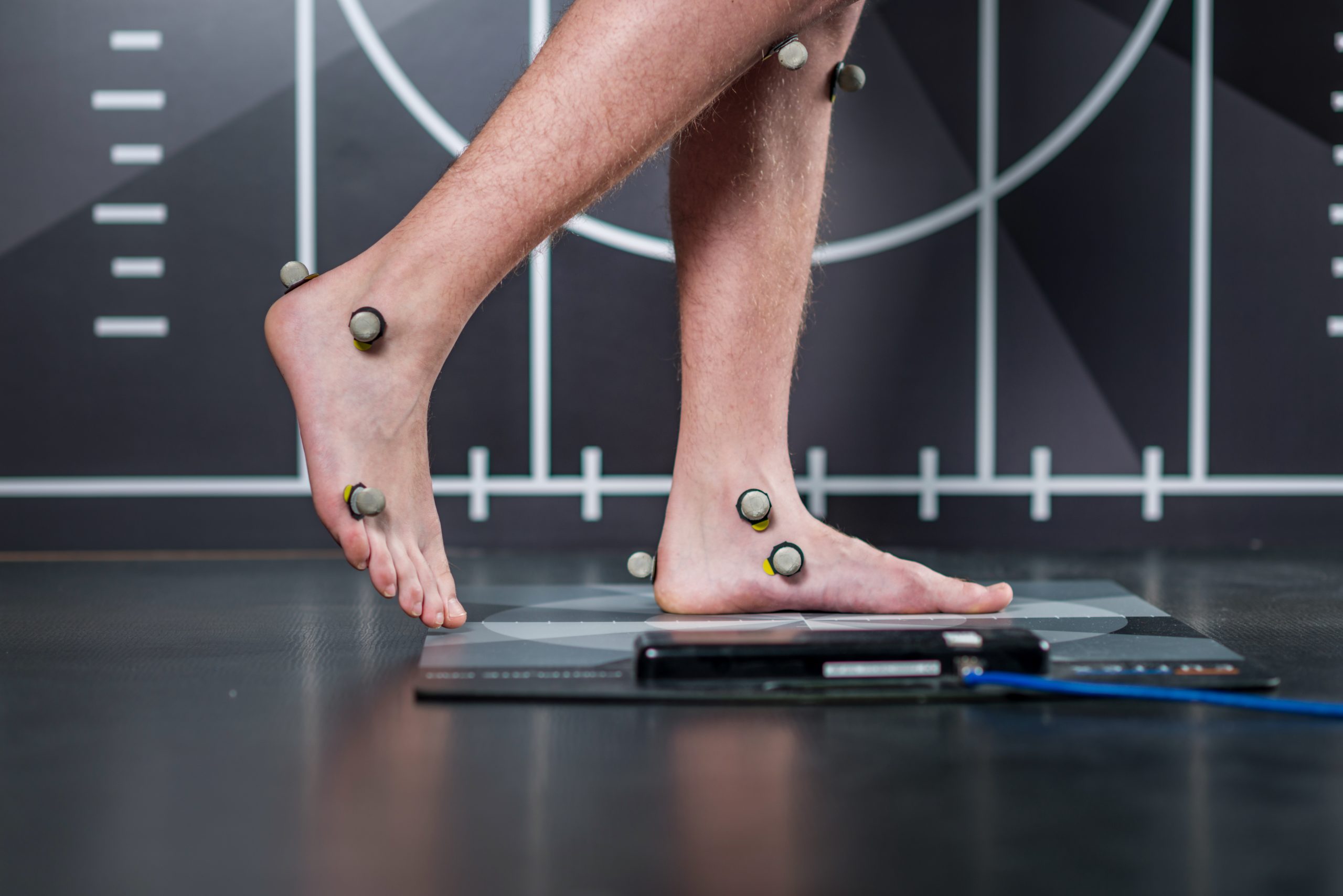
- Biomechanical Gait Assessment — identifies the movement patterns or training factors that overloaded the bone, so the same spot isn't re-injured once you're back on your feet
- Custom Orthotics and Offloading — redistributes pressure away from the affected bone during the healing period and beyond
- Activity Modification Guidance — a structured plan for reducing load in the short term and safely returning to full activity, since resuming too soon is the most common reason stress fractures recur
- Shockwave Therapy (ESWT) — supports the body's healing response in bones that are slow to recover
For more significant stress fractures, a period of immobilisation in a CAM boot may be recommended to fully offload the bone while it heals, alongside rest, ice, and compression in the initial stages.
What to Expect at Your Assessment
Your podiatrist examines the painful area for localised tenderness, reviews your recent activity and training load, and may arrange imaging such as an X-ray or MRI to confirm the diagnosis, since stress fractures don’t always show up on X-ray in the early stages. From there, a plan is set to offload the bone appropriately and address what caused it.


