


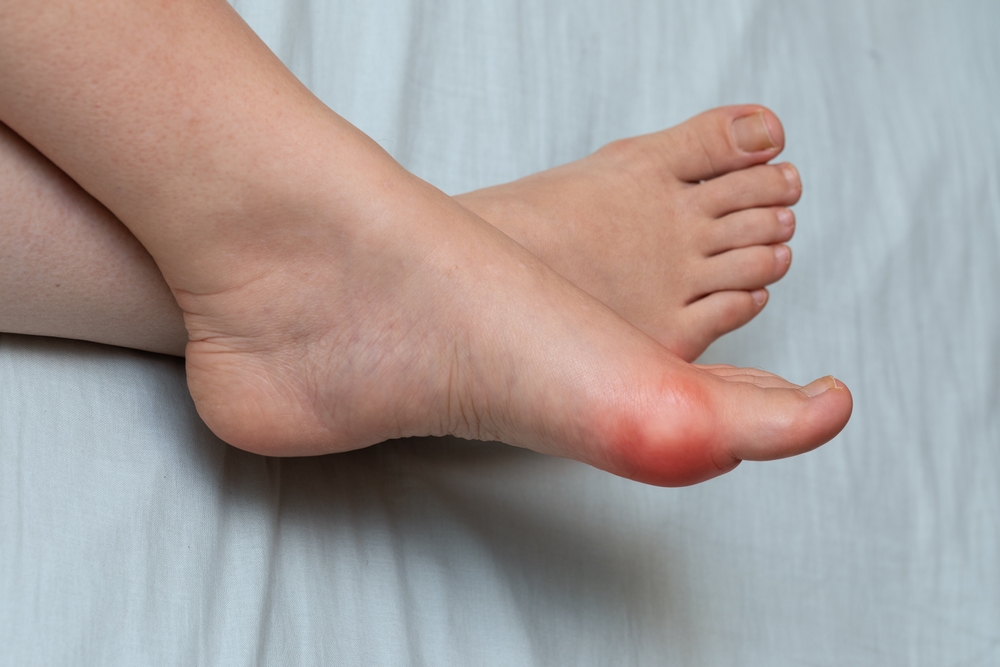





Bunions
A bunion is a progressive, structural change at the base of your big toe that tends to worsen gradually and gets harder to manage the longer it’s left.
At Emerald Hill Podiatry, we assess how far your bunion has progressed and what’s driving it, then build a plan to ease your pain, slow its progression, and help you stay in comfortable, well-fitting footwear for longer.
A bunion (hallux valgus) is a bony bump that forms at the base of the big toe, caused by a gradual shift in the alignment of the big toe joint. As the condition develops, the big toe angles inward toward the second toe, while the joint at its base pushes outward, creating the visible, often prominent bump on the inside edge of the foot.
Bunions aren’t simply an overgrowth of bone; they’re a structural deformity of the joint itself, driven by an imbalance in the forces acting on the big toe over time. Because of this, bunions are progressive by nature, they don’t resolve on their own, and without some form of management, the misalignment tends to continue advancing.
Bunions typically develop and worsen through recognisable stages:
Because bunions tend to progress rather than plateau, addressing them earlier generally allows for more conservative management and a wider range of treatment options.
Since bunions are progressive, an early assessment gives you the most options, both for slowing further changes and for managing pain without necessarily needing surgery.
Get Your Bunion Properly Assessed
Conservative treatment is still highly effective at easing pain, slowing progression, and keeping surgery off the table for as long as possible, or unnecessary altogether.
Options include:
Your podiatrist reviews when you first noticed the bunion, your pain levels, footwear challenges, and family history, then examines joint flexibility, alignment, and degree of deviation, along with your gait. X-rays may be used to confirm the degree of deviation, particularly if surgery is being considered.
From there, you’ll be walked through realistic treatment goals, whether conservative management or a surgical referral, with periodic reassessment since bunions are progressive.


