







Paediatric Flat Feet
Flat feet are one of the most common reasons parents bring their child in to see us at Emerald Hill Podiatry, often after noticing there’s little to no visible arch when their child stands. In the majority of cases, this is a completely normal part of early foot development, but our podiatrists assess each child individually to distinguish a flexible, developing arch from the smaller number of cases that benefit from further support.
Paediatric flat feet, or paediatric pes planus, describes a foot with a low or absent arch in a child, most easily noticed when they stand and the sole of the foot appears to touch the ground almost entirely. Nearly all babies and toddlers are born with flat-looking feet, largely because the arch hasn’t fully formed yet and is cushioned by a layer of baby fat. For most children, an arch gradually becomes visible over the following years as the muscles, ligaments, and bones of the foot mature.
Not all flat feet in children are the same, and the distinction matters for how they’re managed:
Beyond the natural baby fat that makes young feet appear flatter than they are, children’s ligaments are naturally more flexible than adults’, which allows the arch to collapse more easily under weight even once it has started to form. Combined with the fact that the bones of the foot are still developing well into the school-age years, this means a flat-looking foot in a young child is far more often a normal stage of development than a condition requiring treatment.
See a podiatrist if:
Get Your Child's Flat Feet Properly Assessed
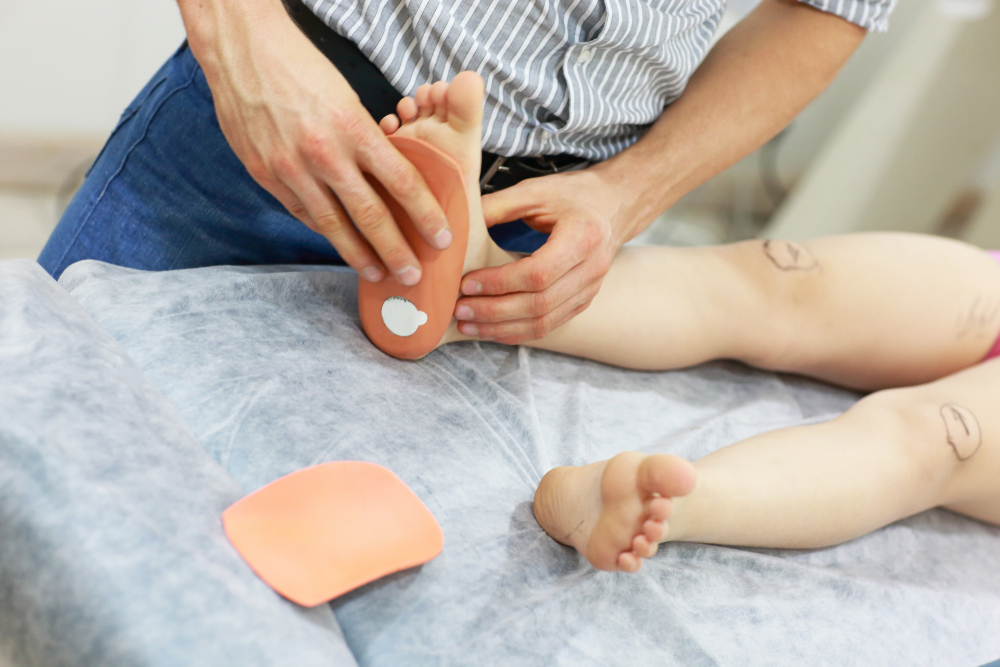
For most children, flexible flat feet don’t need active treatment, but where pain, asymmetry, or a rigid foot type is present, support can help.
Options include:
Your podiatrist examines your child’s foot in both weight-bearing and non-weight-bearing positions to determine whether the flat foot is flexible or rigid, checks their gait, and asks about any pain or activity limitations. In most cases, this gives parents clear reassurance, with a support plan put in place for the cases that need it.


