
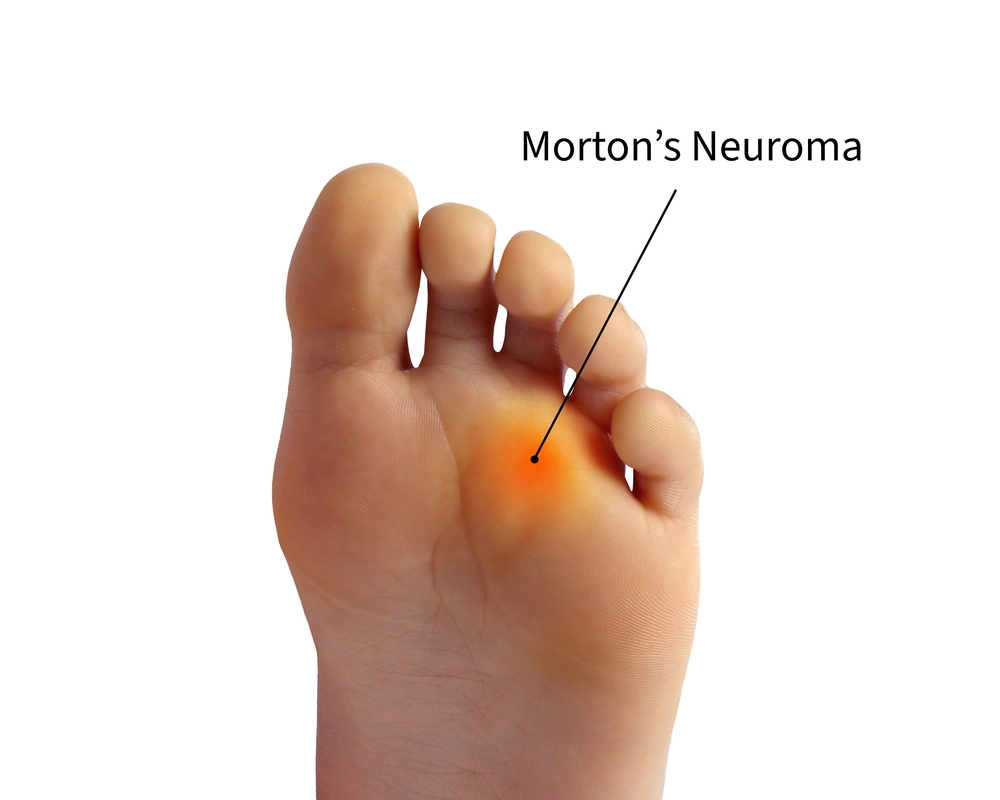






Morton's Neuroma
Morton’s neuroma is a painful thickening of tissue around a nerve in the ball of the foot, often felt as a burning or tingling pain between the toes.
At Emerald Hill Podiatry, we assess which nerve is affected and what’s compressing it, then build a plan to relieve that pressure, starting conservatively and escalating only when needed.
A Morton’s neuroma is a thickening of tissue around one of the nerves running between the long bones of the foot, most commonly between the third and fourth toes. Despite the name, it isn’t a true tumour; it’s the nerve itself becoming irritated and enlarged from repeated compression, most often where it passes between the metatarsal heads in the ball of the foot.
As the nerve thickens, it becomes more sensitive to pressure, and everyday activities like standing or walking can trigger sharp, burning, or electric-shock-like pain.
Most cases occur between the third and fourth toes, though the nerve between the second and third can also be affected.
Get Your Forefoot Pain Properly Assessed
Most cases respond well to a staged approach: reduce the compression irritating the nerve first, then address what’s causing it. Treatment starts conservatively for the vast majority of cases, escalating only where needed.
Options include:
Your podiatrist reviews when your symptoms started, what triggers or eases them, and your footwear and activity levels, then carries out a hands-on assessment with specific tests to localise the nerve pain, alongside a footwear review. Ultrasound may be used to confirm the diagnosis if the picture is unclear. From there, you’ll be walked through the treatment options suited to your case, with escalation to injection or surgical referral only where conservative care hasn’t provided sufficient relief.


